Guide
11 Vegetables and Herbs That Grow in Part Shade
Shade in a garden is rarely total. It is the strip behind the fence, the corner the maple reaches by noon, or a balcony that gets morning sun and nothing after. Fruiting crops like tomatoes and peppers sulk in spots like that. Leafy greens, a few roots and some kitchen herbs cope much better.
Be clear about what part shade means here: about 4 hours of direct sun, not none. Below that, very little edible grows well. Expect slower growth and smaller plants than you would get in full sun. There is an upside, though. In warm regions, a spot out of the afternoon sun can delay bolting a little in greens like cilantro and arugula, which stretches each sowing.
-
Spinach makes a decent crop on 4 hours of sun and likes cool weather anyway. Shade will not save it from long days, though. Once days run past about 14 hours it bolts no matter what you do, so sow it early in spring or wait for fall.
How to grow spinach → -
2Kale
Summer heat makes kale leaves tough and bitter, so a bed with afternoon shade can help in warm weeks. At the other end of the season, the plant handles hard frost. Cabbageworms do not care how much sun it gets, so the row cover still goes on at planting.
How to grow kale → -
Few kitchen herbs suit a shady edge, and parsley is one of them, at about 4 hours of sun. It is a biennial, so the leaves turn bitter once it flowers in its second year. Plan on sowing or buying fresh plants each spring.
How to grow parsley → -
Heat makes cilantro bolt, so a spot out of the afternoon sun can stretch each sowing a little. Expect only a few weeks of leaves per batch either way. Sow small amounts every few weeks rather than one big row, and skip the hottest stretch of summer.
How to grow cilantro → -
A clump of chives by a shady back door is handy and asks for very little. About 4 hours of sun keeps it going. Soggy soil is the bigger risk in a shaded corner, since it can rot the bulbs, so give it a raised edge or a pot that drains well.
How to grow chives → -
6Mint
Mint takes shade better than most herbs, which is part of why it spreads under everything. Keep it in a container even here. Damp, crowded plants in low light are prone to rust and mildew, so cut it back hard now and then to let air move through.
How to grow mint → -
Beets get by on about 4 hours of sun, which is rare for a root crop. Roots may come in smaller, but the greens are edible too, so a shady row is never wasted. Leaf miners tunnel into spring leaves, and row cover laid down at sowing keeps the flies off.
How to grow beets → -
Chard is the steadiest producer on this list. A plant in part shade keeps sending up leaves for months, and above about 80 degrees F some afternoon shade keeps them from toughening. Water through dry spells, since a long dry stretch can still push it to flower.
How to grow swiss chard → -
Arugula grows so fast, in roughly 25 to 45 days, that less sun barely slows you down. Light shade in late spring can slow bolting a little. It will not stop it once days get long, so make the cool weeks your main sowing time.
How to grow arugula → -
10Bok Choy
Bok choy needs about 4 hours of sun and stays compact enough for a pot in a shaded corner. Keep the soil evenly moist from sowing to harvest. A dry bed is a common trigger for early flowering, and a cold snap in fall can do the same.
How to grow bok choy → -
Collards are a big plant for a shady spot, so give each one the full 18 inches. You pick from the bottom up, and new leaves keep coming from the crown. In wet years, black rot and downy mildew show up, so water at the soil line in the morning.
How to grow collard greens →
Before you plant, spend one sunny day tracking the spot. Note when the sun arrives and when it leaves. If you count fewer than about 4 hours, try a pot on wheels that can follow the light, or keep that corner for chairs. Greens sown in deep shade mostly give you leggy stems and a lot of slugs.
Save this guide
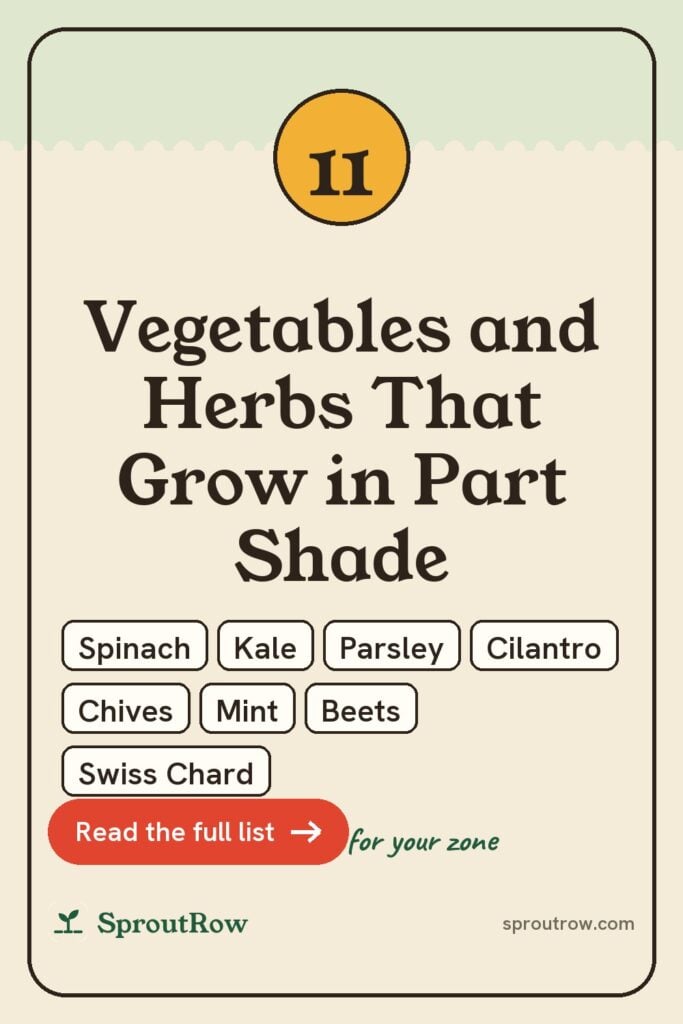
Pin it to a garden board so it is there when planting time comes round.
Questions about this list
Can tomatoes grow in part shade?
They will grow, but most growers find fruit set and ripening drop off sharply below about 6 hours of sun. Save shady spots for leafy crops and give tomatoes the sunniest place you have.
Does morning or afternoon sun matter more?
For cool-season greens, morning sun with afternoon shade is often the better split, since it spares them the hottest part of the day. For heat lovers, the afternoon hours count for more.
Will shade-grown greens taste different?
They are often a little more tender and milder, since they grow slowly and stay cooler. Plants tend to be smaller, so you may want a few more of them.
General guidance for home gardens. Timing depends on your frost dates; check your local extension office for local advice.