Guide
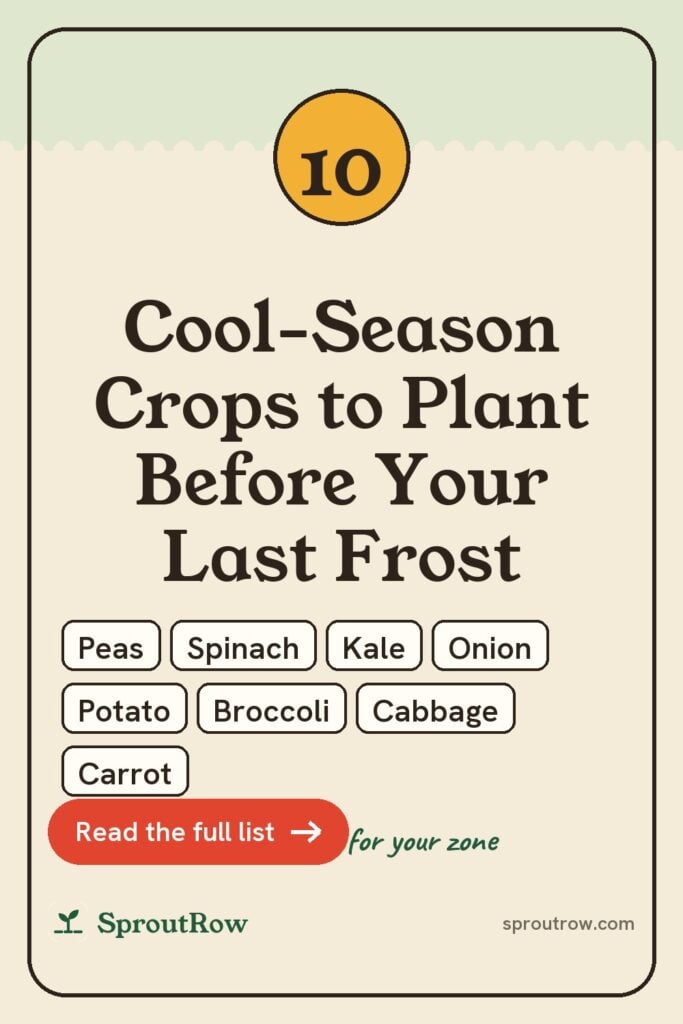
10 Cool-Season Crops to Plant Before Your Last Frost
The first warm weekend of spring is usually too late for peas. These crops want to go in while the nights are still cold, weeks before your average last frost. Get them in early and they finish before summer heat turns them bitter, woody or seedy. Wait for warm weather and you are mostly growing flowers.
Find your average last frost date first. Your local extension office lists it, and you count back from there. The windows below are typical ranges in weeks before or after that date, and some crops need seed started indoors even earlier. The soil matters as much as the air. If the ground is still frozen, or wet enough to squeeze into a muddy ball, wait a week and try again.
-
1Peas
Peas go in first, about 4 to 6 weeks before your last frost, sown straight into the soil. Heat ends their season. Once days pass about 80 degrees F, flowering slows and powdery mildew moves in, so a late sowing costs you pods. Put up the trellis before sowing day.
How to grow peas → -
Spinach can be sown 2 to 6 weeks before your last frost and handles hard frost well. The rush has a reason. Once days stretch past about 14 hours it bolts, whatever you do, so an early sowing gets more weeks of leaves before that happens.
How to grow spinach → -
3Kale
Transplants go out about 4 to 5 weeks before your last frost, from seed started indoors 8 to 10 weeks before it. Kale takes hard frost without much trouble. Its real enemy is the cabbageworm, which arrives as the weather warms, so put row cover on at planting.
How to grow kale → -
Onion sets or transplants go in about 2 to 4 weeks before your last frost. They are slow, at 70 to 120 days, so an early start gives the bulbs time to size up. Put them on the sunny edge of the bed, since a taller crop shading the row shrinks the bulbs.
How to grow onion → -
Seed potatoes go in about 2 to 4 weeks before your last frost. They are only half-hardy, so if a late frost threatens after shoots appear, pull soil or straw over them. Keep them out of last year's tomato spot, because the two share pests and diseases.
How to grow potato → -
Set out transplants about 2 to 3 weeks before your last frost, from seed started indoors 6 to 8 weeks before that date. Where spring turns hot fast, an early variety of about 50 to 55 days helps. Plants packed closer than 12 inches give smaller heads and fewer side shoots.
How to grow broccoli → -
Cabbage transplants go out 2 to 3 weeks before your last frost. Timing matters more than it looks. Heads that finish in midsummer heat come out lower in quality, so plant on time or choose an early variety. Clubroot hangs on in soil for years, so move it each season.
How to grow cabbage → -
Carrots can be sown from about 3 weeks before your last frost to 2 weeks after. Sprouting is the slow part, taking two to three weeks and stalling if the surface crusts. Water lightly and often, or lay a board over the row and lift it the day sprouts appear.
How to grow carrot → -
Beets have a wide window, from about 4 weeks before your last frost to 4 weeks after. Cold soil slows them down, though. Seed sprouts in 5 to 8 days once the soil reaches about 50 degrees F, and a 24-hour soak before sowing speeds it along.
How to grow beets → -
10Leeks
Leeks need a long head start, with seed sown indoors 8 to 14 weeks before your last frost. Transplants then go out 1 to 3 weeks before that date. A warm spell followed by cold can make them bolt, so set out small, pencil-thin plants and feed them lightly.
How to grow leeks →
Keep a sheet of row cover or an old bedsheet by the back door in early spring. Most of these crops take a light frost in stride, but a hard freeze on fresh transplants can set them back by weeks. Write down the date you sowed each crop. Next spring you will know whether to go a week earlier or a week later.
Save this guide
Pin it to a garden board so it is there when planting time comes round.
Questions about this list
What should I do if a hard freeze comes after planting?
Cover young plants with row cover, a sheet or upturned buckets overnight, and take the covers off in the morning. Hardy crops like kale and spinach usually come through. Half-hardy ones like potato and broccoli are more at risk.
How do I find my last frost date?
Your local extension office publishes average dates for your area. It is an average, so a frost after that date is still possible. Watch the forecast for a couple of weeks on either side.
Can I plant these crops later in spring instead?
You can, but many will run into heat before they finish. Spinach, peas and cabbage are the most likely to bolt or suffer. Most of them also do well as a fall crop.
General guidance for home gardens. Timing depends on your frost dates; check your local extension office for local advice.