Guide
12 Vegetables That Are Hard to Kill
Every crop can die. Some just take a lot more neglect before they do. This list sticks to the ones that forgive a missed watering, a late planting or a cold snap, and still give you something to pick by the end.
Forgiving does not mean zero effort. Each crop below still has a weak spot, and the blurbs name it so you know where to look first. Sun, soil and water matter as much as the seed you buy. A crop that is easy in Ohio can sulk in Arizona heat. Your local extension office is worth a quick call about what grows well where you live, and it costs nothing. Start with two or three of these, not all twelve.
-
Seeds go straight into warm soil and come up in days, and the seeds are big enough for small kids to plant. Pods start in about 50 to 60 days with no trellis needed. The weak spot is heat: above about 90 degrees F the flowers can drop, though pods usually return once it cools.
How to grow bush beans → -
Lettuce grows in a pot or a bed and gives baby leaves in about 30 days. You cut, and more grows back. What usually ends it is summer, not you. Heat and dry soil turn the leaves bitter and send the plant to seed, so sow small batches and keep the soil moist.
How to grow lettuce → -
This is the crop for the impatient. Seed sown a few weeks before your last frost can be pulled in about 3 to 5 weeks. Failures tend to come from the ground, not the plant. Hard, lumpy soil gives twisted roots, and uneven watering splits them, so keep the top few inches evenly damp.
How to grow radish → -
Plant one clump and it comes back every spring, often for years. It shrugs off hard frost and needs only about 4 hours of sun. Watch the flowers, though. Left to ripen, they scatter seed across the whole bed, so snip them after bloom if you want one tidy clump.
How to grow chives → -
5Mint
Mint is the plant people fail to kill even when they try. That is also the warning. Its runners escape fast and crowd out neighbors, so grow it in a container, even one sunk into the soil. Follow that one rule and it handles part shade, cold winters and hard cutting.
How to grow mint → -
Garlic asks for almost nothing once it is planted. You push cloves into the soil around your first fall frost and mostly leave them alone. The catch is the long wait, roughly 240 to 280 days, plus wet, heavy ground that can rot cloves over winter. A raised bed helps.
How to grow garlic → -
Chard keeps going after spinach quits. It bolts less readily, grows on about 4 hours of sun, and one sowing can feed you for months as you pick the outer leaves. Leaf miners are the main nuisance. Lay row cover over the seedlings and keep chard apart from beets and spinach.
How to grow swiss chard → -
Green onions skip the parts of onion growing that go wrong. There are no bulbs to size up and no curing, just leaves you snip. They sit 2 inches apart and take frost without fuss. Onion maggots can tunnel into the roots, so if plants wilt and pull up easily, plant the next row elsewhere.
How to grow scallions → -
Oregano is a perennial that does fine with a little neglect. Sun and a pot or a well-drained corner suit it. The one real job comes every few years, when the clump turns woody in the middle. Dig it up and divide it in spring, and you get fresh plants for free.
How to grow oregano → -
Collards are hardy, slow to quit, and picked from the bottom up, so one plant keeps producing for a long season. By late season a plant can look like a bare stalk with a tuft on top. That is normal. Cabbage worms are the pest to watch, and row cover keeps them off.
How to grow collard greens → -
11Kale
Kale handles hard frost, and the leaves often taste sweeter after a couple of light ones. It grows in pots or beds on as little as 4 hours of sun. The real threat is small and green: cabbageworms. Row cover put on at planting time keeps the white butterflies from laying eggs.
How to grow kale → -
12Zucchini
If you want one plant that makes you feel competent, zucchini is a good bet. It grows fast and keeps setting fruit through summer. What it needs is attention, not skill. Miss a couple of days at peak season and the fruit balloons, and squash bugs need checking under the leaves twice a week.
How to grow zucchini →
None of these come with a promise. What these twelve share is room for mistakes, which is what a first season mostly is. Pick a few your family will eat, plant them at the right time for your frost dates, and write down what happened. Your own notes will teach you more than any list, this one included.
Save this guide
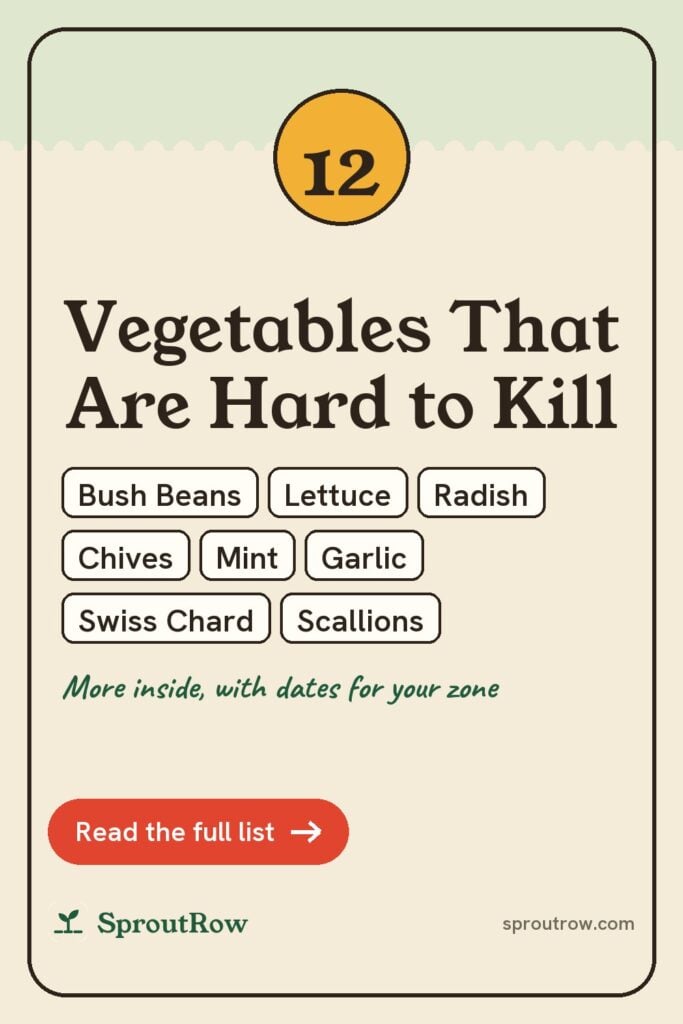
Pin it to a garden board so it is there when planting time comes round.
Questions about this list
What is the easiest vegetable for a total beginner?
Most growers point to radishes or bush beans. Both go straight into the soil as seed and show results within a few weeks. Pick the one your family is more likely to eat.
Do easy crops still need fertilizer?
Most do better in soil with compost worked in before planting. Heavy feeding is rarely needed for this group. A soil test through your local extension office tells you what your ground is missing.
Why did an easy crop still fail for me?
The usual causes are too little sun, soil that stays soggy or dries out fast, and planting at the wrong time for your frost dates. Pests come next. Check those before you blame the seed.
General guidance for home gardens. Timing depends on your frost dates; check your local extension office for local advice.