Guide
8 Garden Plants to Keep Away From Dogs and Cats
Plenty of dog and cat owners grow food, and most garden crops cause no trouble at all. A handful deserve a second look. This list names eight from our crop data. Each entry says plainly whether the ASPCA lists the plant as toxic or whether it depends on the part. Then it gives one practical way to keep curious pets away.
This is not medical advice, and I am not a vet. Pets differ in size and in how much they eat, and several of these mostly cause trouble in larger amounts. If your pet chews or swallows any of them, ask your vet or call the ASPCA Animal Poison Control Center. It helps to keep that number on the fridge, right next to the seed packets.
-
Toxic. The ASPCA lists onion as toxic to dogs and cats, raw or cooked, since it can harm red blood cells. Leeks and scallions are close kin. A short fence keeps digging dogs off the bulbs. If a pet eats any, ask your vet or call the ASPCA Animal Poison Control Center.
How to grow onion → -
Garlic is listed by the ASPCA as toxic to dogs and cats, and the concern covers cloves, leaves and scapes. It sits in the bed for most of a year, so it needs guarding longer than most crops. Should a pet eat some, ask your vet or call the ASPCA Animal Poison Control Center.
How to grow garlic → -
Toxic to dogs, cats and horses on the ASPCA list. Chives often live in a pot by the back door, right where pets pass, so lift that pot onto a ledge or table. If one eats some, ask your vet or call the ASPCA Animal Poison Control Center.
How to grow chives → -
Marked Check. Ripe fruit is listed as non-toxic, but leaves, stems and green fruit contain solanine and can upset a pet's stomach. Pick up dropped green fruit and keep cats from chewing the vines. If a pet chews the plant, ask your vet or call the ASPCA Animal Poison Control Center.
How to grow tomato → -
Check, and it depends on the form. Plain cooked potato is fine in moderation, per the ASPCA. Raw potato, green skins, sprouts and the leafy plant are the concern. Store seed potatoes and the harvest out of reach. If a pet eats those parts, ask your vet or call the ASPCA Animal Poison Control Center.
How to grow potato → -
Check. Kernels are a common food, but a chewed cob can block a dog's gut. The corn plant on the ASPCA list is a houseplant, not sweet corn. Bag cobs before they hit the trash. If your pet swallowed one, ask your vet or call the ASPCA Animal Poison Control Center.
How to grow sweet corn → -
7Mint
The ASPCA lists mint as toxic to dogs, cats and horses because of its oils, mostly after a large amount. A pot on a high ledge keeps it contained and out of reach at once. If your pet eats a lot, ask your vet or call the ASPCA Animal Poison Control Center.
How to grow mint → -
On the ASPCA list as toxic to dogs and cats, though the usual signs are mild stomach upset. Oregano spills over bed edges, right where a nibbling cat finds it, so trim it back from paths. If a pet chews it, ask your vet or call the ASPCA Animal Poison Control Center.
How to grow oregano →
Most pets ignore most garden plants. The ones that do not tend to dig, chew or raid the compost, so watch those habits more than the crop list. Fence the bed or grow the riskier plants in raised pots, and clear away dropped fruit and corn cobs. When you are unsure, ask your vet or call the ASPCA Animal Poison Control Center.
Save this guide
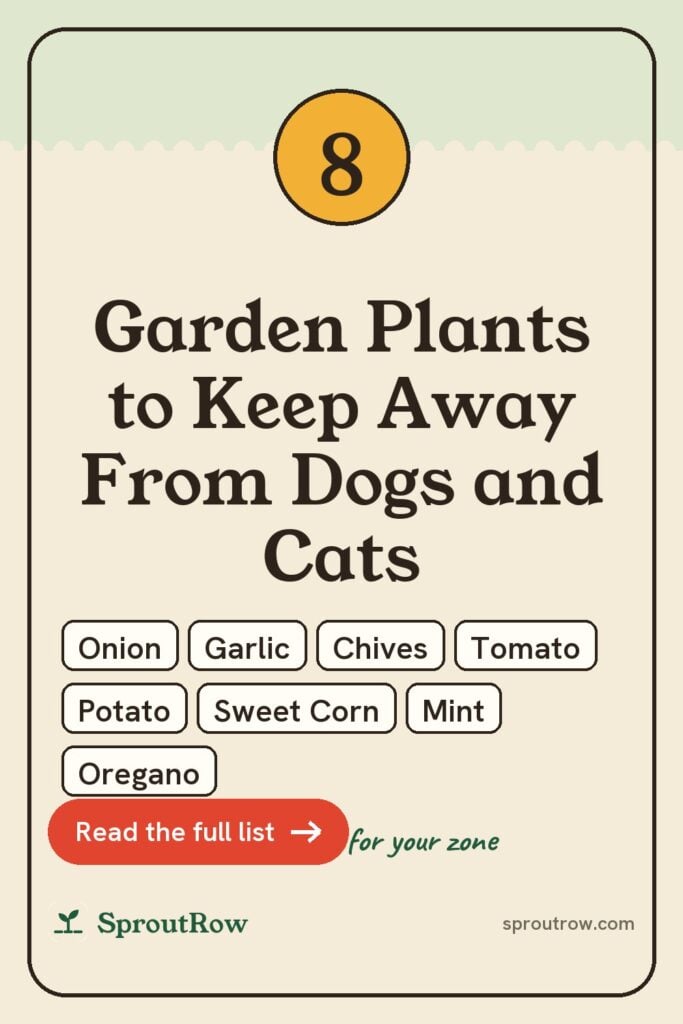
Pin it to a garden board so it is there when planting time comes round.
Questions about this list
Are tomato plants safe for dogs?
Ripe tomato fruit is listed as non-toxic. The leaves, stems and green fruit are the concern, since they contain solanine. If your dog chews the plant, ask your vet or call the ASPCA Animal Poison Control Center.
Which garden crops are marked safe for pets?
Many are. In our crop data, lettuce, carrots, cucumbers, zucchini, bush beans and basil are all marked Safe. Safe does not mean a pet should eat a lot of them, so keep portions small.
How do I keep my dog out of the vegetable bed?
A low fence or a raised bed with a border stops most dogs. Give your dog its own digging spot elsewhere, and do not leave pulled plants or cobs lying around.
General guidance for home gardens. Timing depends on your frost dates; check your local extension office for local advice.