Guide
10 Crops to Plant for a Fall Harvest
Fall is the second season most gardens skip. By late summer the tomatoes are sprawling, and nobody wants to sow seed in the heat. That is a shame, because many cool-season crops do better heading into fall than heading into summer. Some taste sweeter after a light frost.
The trick is counting backward. Every window below is in weeks before your average first fall frost, so find that date and work back from it. In most of the U.S., that means planting during late summer heat, which is hard on young plants. Water daily until they settle in, and use a little shade cloth for the first week if your summers run hot. The harvest comes when the rest of the garden is winding down.
-
1Kale
Kale goes in earliest, about 10 to 13 weeks before your first frost. It handles hard frost, and the leaves often taste best after a couple of light ones. A spring plant that limped through summer may bounce back too, once the nights cool off.
How to grow kale → -
Plant cabbage 10 to 12 weeks before your first fall frost. New transplants go in during summer heat and need water every day until they start to grow. Skip feeding once the heads start to firm, since late nitrogen can make them split.
How to grow cabbage → -
Here is the odd one out. Beans are tender and die at the first frost. Sow them 10 to 12 weeks before that date, and their 50 to 60 days fit in time. They also fill the gap after garlic comes out in summer.
How to grow bush beans → -
Collards have the widest fall window here, 6 to 12 weeks before your first frost. Maryland Extension suggests adding 10 to 14 days to the packet's maturity time when you count back, to allow for shorter days. Fall plants usually taste better than spring ones.
How to grow collard greens → -
Broccoli goes in 7 to 11 weeks before your first frost. A slower variety of about 65 days can suit fall, since the heads finish in cool weather and short days. Cabbage worms are still busy in late summer, so cover the transplants from day one.
How to grow broccoli → -
Sow carrots 8 to 10 weeks before your first frost. Sprouting in warm, dry late-summer soil is the catch, since seed takes two to three weeks and needs a damp surface the whole time. Once they are up, carrots handle frost well.
How to grow carrot → -
Cauliflower is the hardest crop on this list, and fall is often the easier season for it. Set out transplants 6 to 10 weeks before your first frost. Use small, young plants, since root-bound seedlings tend to form tiny heads early. Cut the head as soon as the curds start to loosen.
How to grow cauliflower → -
Turnips sown 6 to 10 weeks before the first frost give you roots and greens before the cold sets in. Take only a few leaves from each plant if you want roots too. Rotate them away from beds that held cabbage family crops, since they share pests.
How to grow turnip → -
Bok choy fits a short fall gap, going in 6 to 9 weeks before your first frost. Baby heads come quickly. Mulch the bed with straw or shredded leaves once nights cool, because steadier soil temperatures help prevent the early flowering a cold snap can cause.
How to grow bok choy → -
10Spinach
Spinach goes in last, 4 to 8 weeks before your first frost. Wait until the soil has cooled to 70 degrees F or less before you sow, even if the count says go, because seed sprouts poorly in hot soil. Once it is up, it handles hard frost.
How to grow spinach →
My first fall carrots never came up because I watered the row once and then forgot about it for a week. Late-summer seed needs more care than spring seed, not less. Mark your sowing dates on a calendar, count back from your first frost, and plant a little late rather than not at all. A short harvest still counts.
Save this guide
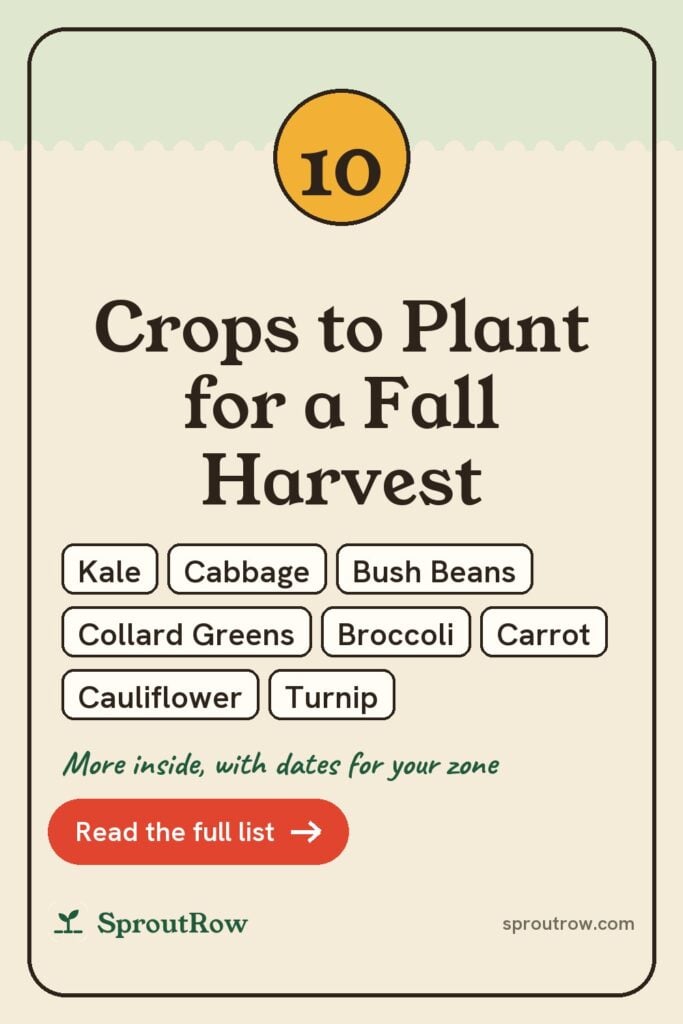
Pin it to a garden board so it is there when planting time comes round.
Questions about this list
When should I start a fall garden?
Find your average first fall frost date and count back by the weeks listed for each crop. In most of the U.S., the earliest fall crops go in during mid to late summer.
Can fall crops survive frost?
Hardy crops like kale, collards, carrots, cabbage and spinach handle frost well. Half-hardy ones such as broccoli and cauliflower take a light frost. Bush beans are tender and die at the first one.
What if I planted my fall crops too late?
Cover young plants with row cover on cold nights to buy some time. Quick greens like spinach may still give you baby leaves. Slower crops may not finish, but you lose little more than a packet of seed.
General guidance for home gardens. Timing depends on your frost dates; check your local extension office for local advice.