Vegetable / Cool season
Turnip
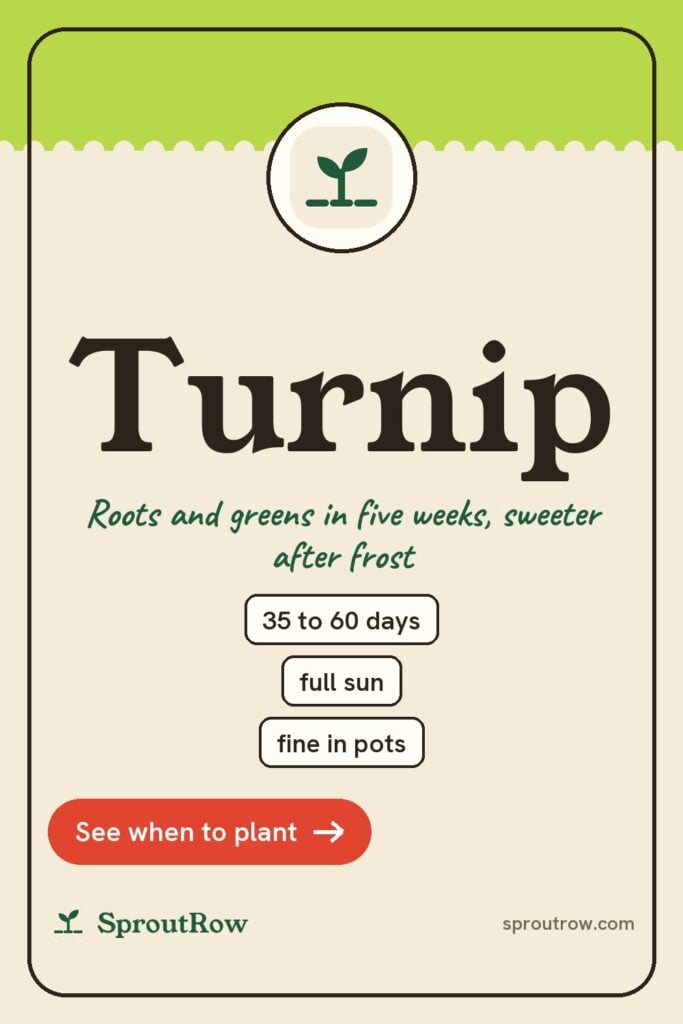
Roots and greens in five weeks, sweeter after frost
Plant out byApr 6zone 6
- Family
- Mustard (Brassicaceae)
- Sun
- Full sun (6+ h)
- Difficulty
- Easy
- Days to harvest
- 35-60 days
- Spacing
- 4 in apart, rows 12 in
- Pot size
- 3 gal pot (fine in pots)
- Frost
- Hardy
- Start
- Direct sow
- Water
When to plant
Showing .
Averages for a typical garden in the region. Your local frost dates may differ by 2-3 weeks, check a local source.Too late this year (try fall)
In zone 6, sow or plant outdoors Mar 23 to Apr 6; sow again for fall Aug 11 to Sep 8. Average last frost Apr 20, first fall frost Oct 20.
Units
Turnips are on the table in about five weeks, which makes them one of the quickest roots you can grow. Salad types like 'Hakurei' are ready around 35 days, while 'Purple Top White Globe' takes closer to 55. The trap is heat. Roots that size up as days climb into the 80s turn woody, hot and bitter, and uneven watering does the same. Sow early, keep the soil evenly moist with an inch or more of water a week, and pull them before summer sets in.
Spring sowing goes in 2 to 4 weeks before your last frost, straight into the bed. Turnips are grown from seed sown in place, since they do not transplant well. Thin to 3 or 4 inches apart once seedlings have a few true leaves, and cook the thinnings. Seeds come up in 7 to 10 days once the soil reaches 40 degrees F, and a fresh row every four weeks keeps them coming.
Fall is when they shine. A sowing 6 to 10 weeks before the first fall frost matures in cool weather, and a few frosts sweeten the roots. Flea beetles pepper young leaves with tiny holes, and root maggots tunnel into the roots. A row cover from sowing day saves a lot of grief. In a pot, stick to small salad types. Pull them at golf ball size to eat raw, or let a few reach 3 inches for roasting.
Things to consider
- Too much nitrogen gives you a fine crop of leaves and roots the size of a marble. Go easy on high-nitrogen fertilizer, especially early on. Utah State suggests one light side-dressing about six weeks after the seedlings come up.
- Turnips are a cabbage relative and share its diseases. Rotate them away from beds that held kale, cabbage or broccoli recently, which also helps with root maggots. Collars and row covers keep the egg-laying flies away from the base of each plant.
- Want both roots and greens? Take only a few leaves from each plant. Strip a plant bare and the root stops growing. 'Purple Top', 'White Globe' and 'Tokyo' are dual-purpose types that handle both jobs.
Good neighbours
Pests to watch for
Flea beetlesCabbage root maggotsAphidsCabbage worms
Questions about growing turnip
Why do my turnips taste bitter?
Heat and dry spells are the usual reasons. Roots that finish in warm weather, or swing between parched and soaked, get sharp and woody. Fall crops that mature after a frost or two tend to be the mildest. A summer mulch keeps the soil cooler and evenly damp.
Are turnip tops worth eating?
Yes, they are often cooked as greens, and some varieties such as 'Shogoin' are grown mainly for their leaves. Cut them about 2 inches above the crown so they can regrow. Greens are ready about a month after sowing. Utah State advises picking the older leaves first and leaving the center to keep growing.
How long will turnips keep after harvest?
Utah State Extension says washed roots stored cool and moist, around 35 degrees F with high humidity, keep 3 to 4 months. Trim the tops first. A home fridge drawer will not match that, so use those sooner. Many gardeners leave a few roots in the bed under heavy mulch and dig them as needed, unless the soil freezes deep.
Save this crop
Pin it to a garden board so it is there when planting time comes round.
Similar crops
Sources
General guidance for home gardens. Frost dates are averages for a zone or region; check a local source (in the US your county extension office) for local timing.