Vegetable / Warm season
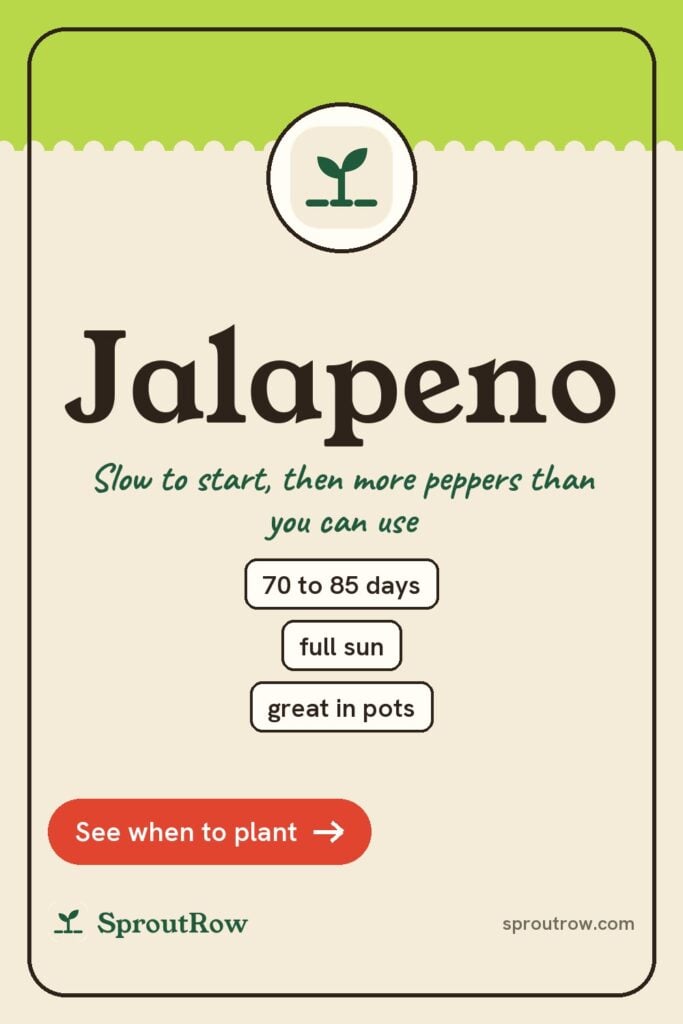
Jalapeno
Slow to start, then more peppers than you can use
Plant out byMay 18zone 6
- Family
- Nightshade (Solanaceae)
- Sun
- Full sun (6+ h)
- Difficulty
- Some care
- Days to harvest
- 70-85 days
- Spacing
- 14 in apart, rows 24 in
- Pot size
- 5 gal pot (great in pots)
- Frost
- Tender
- Start
- Start indoors
- Water
When to plant
Showing .
Averages for a typical garden in the region. Your local frost dates may differ by 2-3 weeks, check a local source.Wait until Feb 9
In zone 6, start seeds indoors Feb 9 to Feb 23; plant out May 4 to May 18. Average last frost Apr 20, first fall frost Oct 20.
Units
Pepper seed is slow and fussy at the start. Sow it about a quarter inch deep. It wants soil around 80 degrees F to sprout, so a cold windowsill can leave you staring at bare trays for weeks. Sow indoors 8 to 10 weeks before your last frost, on a heat mat if you have one, then grow the seedlings near 70 degrees F. This is the stage where most people give up and buy a plant, which is fine.
Wait to plant out until frost is long gone and the soil has warmed to about 65 degrees F. A jalapeno set into cold ground just sulks. Harden seedlings off for a week first, setting them outside a little longer each day. Give each plant 12 to 18 inches and as much sun as you have, ideally a full day. In a heat wave, light afternoon shade helps keep the fruit from scalding.
After that it is mostly picking. The first peppers come about 70 to 85 days from transplant, and a healthy plant keeps setting more until fall. Pick them green and firm, or leave a few to turn red. They are happy in pots, which is how I grow mine: a 5-gallon bucket on the balcony with holes drilled in the bottom. Wear gloves the day you cut a big batch for pickling, and keep your hands away from your eyes.
Things to consider
- A seedling that flowers while still small in its tray can stay stunted. Don't hold plants indoors too long, and plant out once nights stay above 50 degrees F and the soil feels warm to the touch.
- Potted plants dry out fast in midsummer and may need water every day, sometimes twice in a heat wave. A saucer helps on a hot balcony, but empty it after rain so roots don't sit in water for days.
- Heat varies by variety, from roughly 2,500 to 8,000 Scoville units. Mild and extra-hot strains both exist, so read the seed packet if your family is spice shy or you plan to pickle a lot for winter.
Good neighbours
Keep apart
Pests to watch for
AphidsThripsSpider mitesFlea beetles
Questions about growing jalapeno
Why are my jalapenos not hot?
Heat depends on the variety and on the weather, so taste one from each plant before you pickle a big batch. Plants that go through hot, dry stretches tend to make spicier pods, and older pods have had more of that stress. A mild, damp summer can give you mild peppers, even from seed that ran hot the year before.
Do jalapeno plants need a stake?
Often, yes, once they are loaded with fruit. Branches are brittle and can snap in a summer storm or under the weight of a good set. A short stake or small tomato cage put in at planting time avoids stabbing the roots later, when the plant is already heavy.
What bugs should I look for on peppers?
Aphids and thrips on new growth are the most common, with spider mites in hot, dry weather. Flea beetles chew tiny holes in young leaves. A hard spray of water knocks back aphids and mites, and a weekly look under the leaves catches most trouble early, before it spreads.
Save this crop
Pin it to a garden board so it is there when planting time comes round.
Similar crops
Sources
General guidance for home gardens. Frost dates are averages for a zone or region; check a local source (in the US your county extension office) for local timing.