Vegetable / Warm season
Bell Pepper
Also called sweet pepper, capsicum
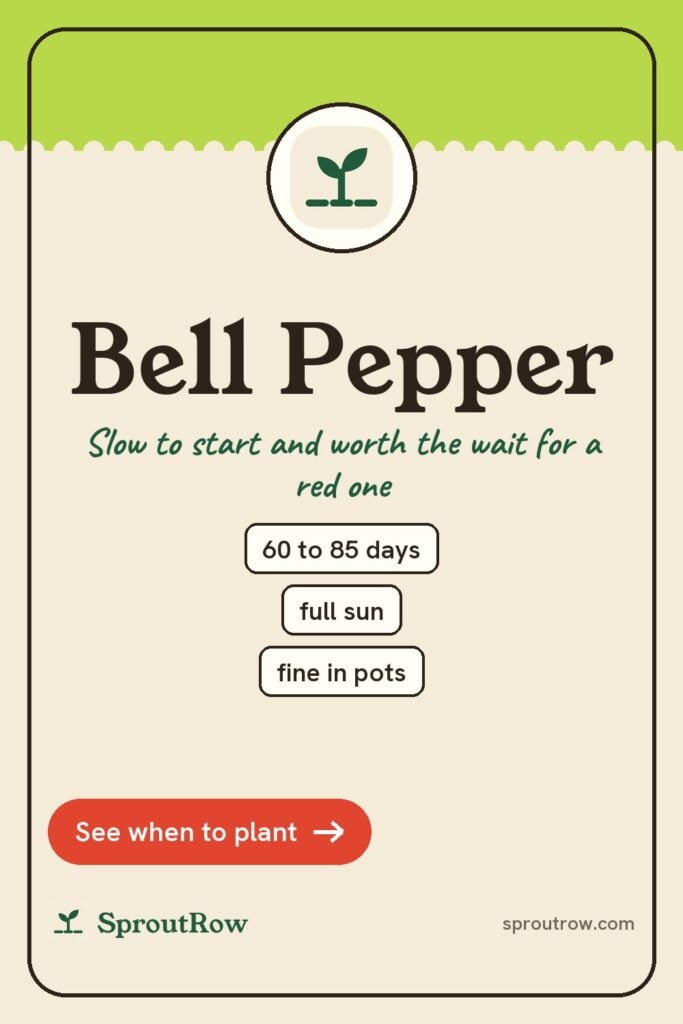
Slow to start and worth the wait for a red one
Plant out byMay 25zone 6
- Family
- Nightshade (Solanaceae)
- Sun
- Full sun (6+ h)
- Difficulty
- Fussy
- Days to harvest
- 60-85 days
- Spacing
- 18 in apart, rows 30 in
- Pot size
- 5 gal pot (fine in pots)
- Frost
- Tender
- Start
- Start indoors
- Water
When to plant
Showing .
Averages for a typical garden in the region. Your local frost dates may differ by 2-3 weeks, check a local source.Wait until Feb 9
In zone 6, start seeds indoors Feb 9 to Mar 9; plant out May 4 to May 25. Average last frost Apr 20, first fall frost Oct 20.
Units
Peppers test your patience twice. First at the seed stage, since you sow them indoors 8 to 10 weeks before your last frost and they grow at a crawl. Then again on the plant, where a green pepper can hang for weeks before it turns red. Nothing about this crop is quick.
Cold is the main early setback. Set plants out too soon and they tend to sit and sulk. Wait until the soil is about 65 degrees F, usually 2 to 3 weeks after your last frost. Heat brings the opposite trouble in midsummer. Daytime highs above 85 to 90 degrees F, or nights below 60, can make flowers drop. Blossom end rot shows up as a soft, dark patch at the bottom of the fruit and usually traces back to uneven watering. Steady moisture and a layer of mulch prevent most of it.
Bell peppers handle a container better than most fruiting crops. A 5 gallon pot holds one plant, and on a balcony you can shift it to follow the sun. In a bed, space plants 12 to 18 inches apart. Resist stripping leaves to let in light, since bare fruit sunburns easily and gets pale, papery patches. Every color starts green, so you can pick early for a steady supply or wait for sweeter, fully colored fruit. Growers in short-season areas often settle for green and call it a win.
Things to consider
- Plants loaded with fruit can snap in a storm. A short stake or small cage pushed in at planting keeps branches from splitting. Tie stems loosely with soft garden tape so they can still sway a little.
- Aphids and spider mites gather on the undersides of leaves, most of all in hot, dry spells. Check there first and hose them off before numbers build. Fine webbing and speckled, dull leaves are the giveaway for mites.
- Rotate away from beds where tomatoes, potatoes or eggplant grew last year. All of them share soil diseases with peppers. On a balcony, fresh potting mix each spring does the same job.
Good neighbours
Keep apart
Pests to watch for
AphidsSpider mitesThrips
Questions about growing bell pepper
Are green and red bell peppers the same plant?
Yes. Green peppers are simply unripe. Left on the plant, most varieties turn red, yellow, orange or purple and get sweeter as they go. The catch is that the plant sets fewer new fruit while it ripens the old ones. Picking a few green early can keep the plant busy.
How many days after transplant until the first pepper?
Most bell types give a green pepper roughly 60 to 85 days after you set them out, depending on variety. Full color adds more time. In short-season areas, choose an early variety and use the warmest spot you have, such as a south wall. Black plastic or a dark pot warms the roots and can help too.
Should I grow bell peppers from seed or buy plants?
Seed gives you more variety choices but needs a warm start, ideally soil at 70 degrees F or above, and two months or more indoors. Buying transplants skips that stage. Either way, harden plants off for a week or two before planting out. Look for stocky plants with dark leaves and no open flowers yet.
Save this crop
Pin it to a garden board so it is there when planting time comes round.
Similar crops
Sources
General guidance for home gardens. Frost dates are averages for a zone or region; check a local source (in the US your county extension office) for local timing.