Vegetable / Warm season
Pumpkin
A whole summer of vine for a few orange globes
Plant out byJun 1zone 6
- Family
- Gourd (Cucurbitaceae)
- Sun
- Full sun (6+ h)
- Difficulty
- Some care
- Days to harvest
- 90-120 days
- Spacing
- 48 in apart, rows 96 in
- Pot size
- 20 gal pot (fine in pots)
- Frost
- Tender
- Start
- Either
- Water
When to plant
Showing .
Averages for a typical garden in the region. Your local frost dates may differ by 2-3 weeks, check a local source.Too late this year (try fall)
In zone 6, start seeds indoors Mar 23 to Apr 6; plant out Apr 27 to Jun 1. Average last frost Apr 20, first fall frost Oct 20.
Units
My first pumpkin vine left the bed in week three, crossed the path, and tried to climb the recycling bin. Plan for that size. A regular pumpkin wants 50 to 100 square feet, and even the mini types need a few feet each way. In a 4×8 bed, one plant is the whole bed, and I gave up the hose reel that year.
The trouble usually arrives in July. Squash vine borers tunnel into the base of the stem, and a healthy plant can wilt flat in a single afternoon. Squash bugs and cucumber beetles pile on later, and powdery mildew dusts the leaves by late summer. Row cover until flowering helps, but lift it once blooms open, because bees do the pollinating. Check the stem near the soil for small holes and wet, crumbly frass. Once a borer is inside, sprays do little.
Timing works backward from when you want orange fruit. Sow after your last frost in warm soil, and count the 90 to 120 days on the seed packet. Northern growers often sow in late May. In the Deep South, waiting until early July keeps fruit from going soft before October. Small kinds like 'Baby Boo' can go in a 20 to 25 gallon tub with a trellis. Big carving pumpkins belong in the ground, ideally somewhere nothing else needs the space. On a balcony, grow one mini up a trellis for fun and let a farm stand handle the jack-o'-lantern.
Things to consider
- Water deeply once or twice a week at the roots, not over the leaves. Wet foliage at dusk gives powdery mildew a head start, and a big vine drinks a lot in July heat. A soaker hose under mulch makes this easy and keeps mud off the fruit.
- These are heavy feeders. Work compost into the hill before sowing, then side-dress when the vines start to run. Hungry plants still flower but set few fruit. A soil test from your local extension office tells you more than guessing.
- Leave 3 to 4 inches of stem when you cut, and never carry one by that handle. A snapped stem lets rot in, and that pumpkin may not last until the porch. Many growers let them sit somewhere warm and dry for a week or two so the rind hardens.
Good neighbours
Keep apart
Pests to watch for
Squash vine borersSquash bugsCucumber beetlesAphids
Questions about growing pumpkin
Why are my pumpkin flowers falling off without fruit?
Early blooms are male, and they drop after a day by design. Female flowers show up a week or two later with a tiny round pumpkin under the petals. If those shrivel too, bees may be scarce, so try moving pollen with a small brush in the morning. One pass per flower is enough.
When should I plant pumpkins to have them ready for Halloween?
Count back from early October using the days on your seed packet. Most northern growers sow in late May, while far southern gardens wait until early July. Plant too early and the fruit may soften before the holiday. If yours ripen early anyway, cut them and keep them cool and dry until the big day.
How long do harvested pumpkins keep?
Whole, unbruised pumpkins can last 3 to 6 months in a dry spot around 45 to 55 degrees F. Skip the fridge and damp corners of the basement. Check them every week or two, since one soft pumpkin can spoil its neighbors. Keep them on a shelf or cardboard, not touching each other.
Save this crop
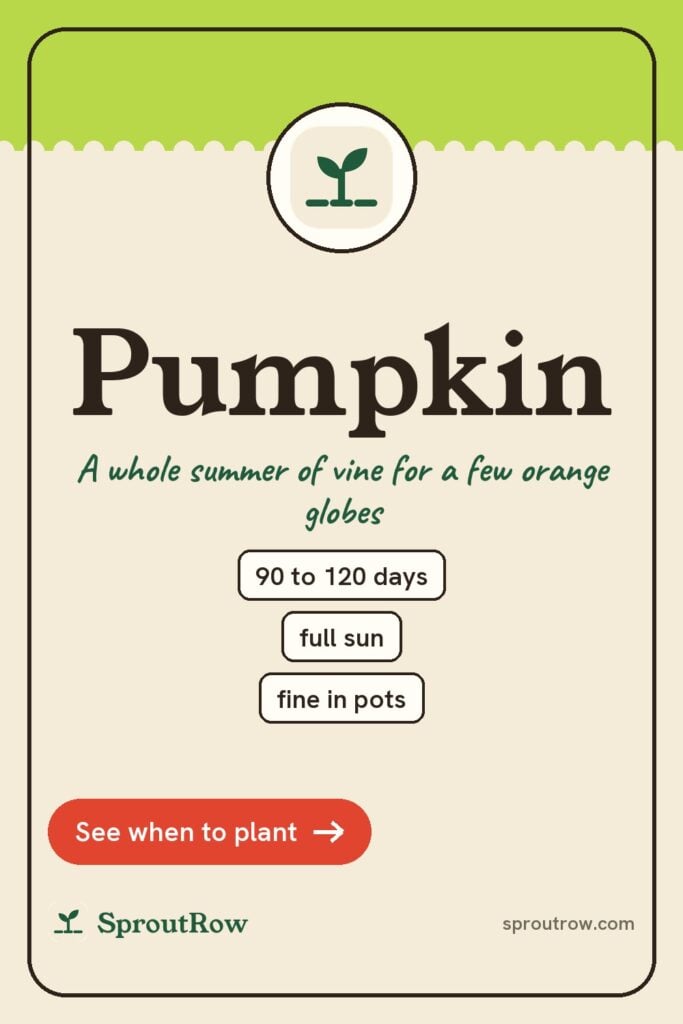
Pin it to a garden board so it is there when planting time comes round.
Similar crops
Sources
General guidance for home gardens. Frost dates are averages for a zone or region; check a local source (in the US your county extension office) for local timing.